Japchae
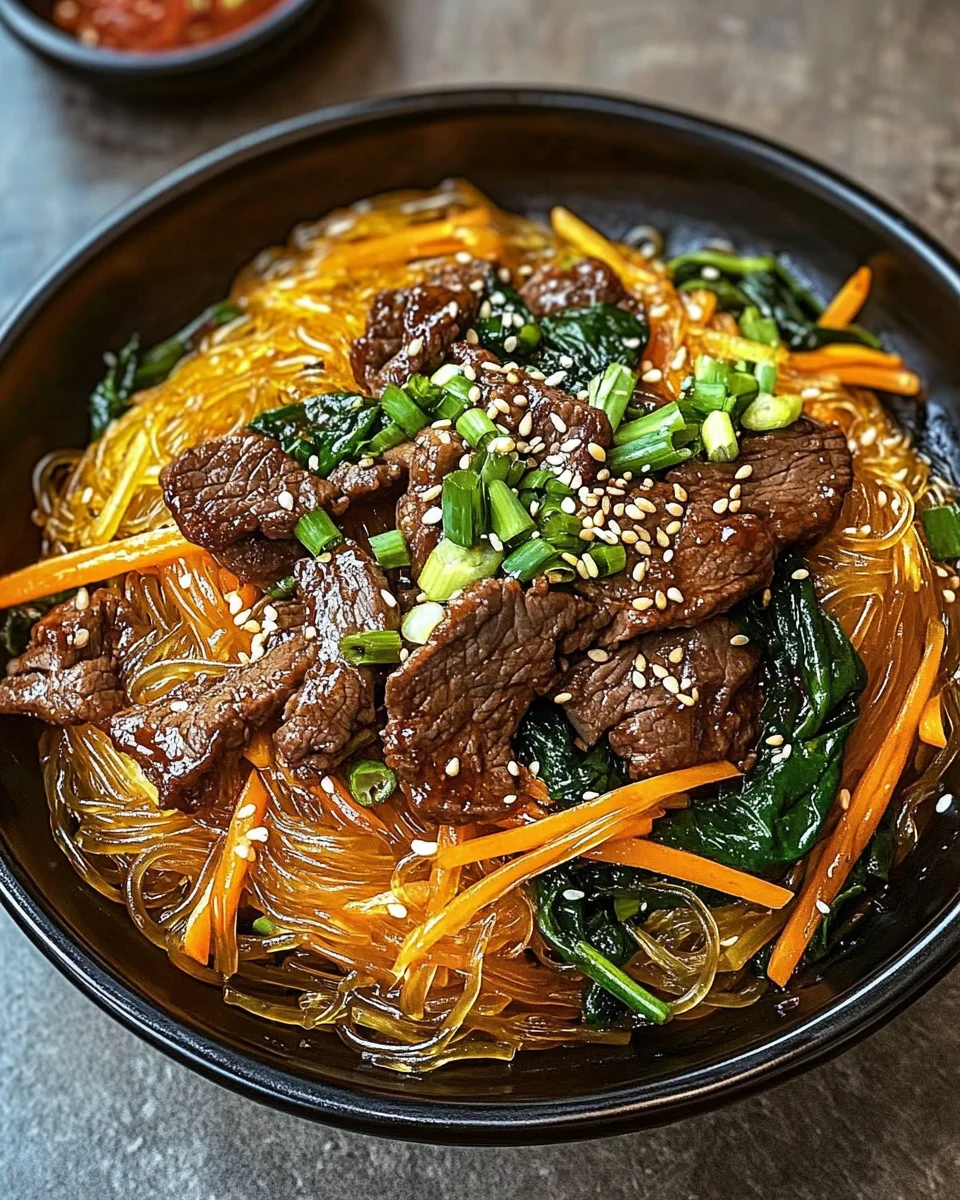
This Japchae recipe brings the delightful flavors of Korea right to your table. Perfect for gatherings, family dinners, or a cozy night in, this dish showcases chewy sweet potato noodles stir-fried with tender beef, vibrant vegetables, and a savory-sweet sauce. Its unique textures and colors make it not just a meal but a feast for the senses.
Why You’ll Love This Recipe
- Incredibly Flavorful: The combination of soy sauce and sesame oil creates a rich, savory flavor profile that elevates every bite.
- Versatile Ingredients: Customize your Japchae with your choice of protein—beef, chicken, tofu, or shrimp—and add any vegetables you love.
- Easy to Prepare: With simple steps and quick cooking times, this recipe is perfect for both novice cooks and seasoned chefs.
- Great for Meal Prep: Make a large batch and enjoy leftovers throughout the week—it tastes even better the next day!
- Perfect for Any Occasion: Whether you’re hosting a dinner party or preparing a weeknight meal, Japchae is always a crowd-pleaser.
Tools and Preparation
To make the best Japchae, having the right tools on hand makes all the difference. Here’s what you’ll need to create this delicious dish.
Grab This Chef Knife Now - Almost Gone!
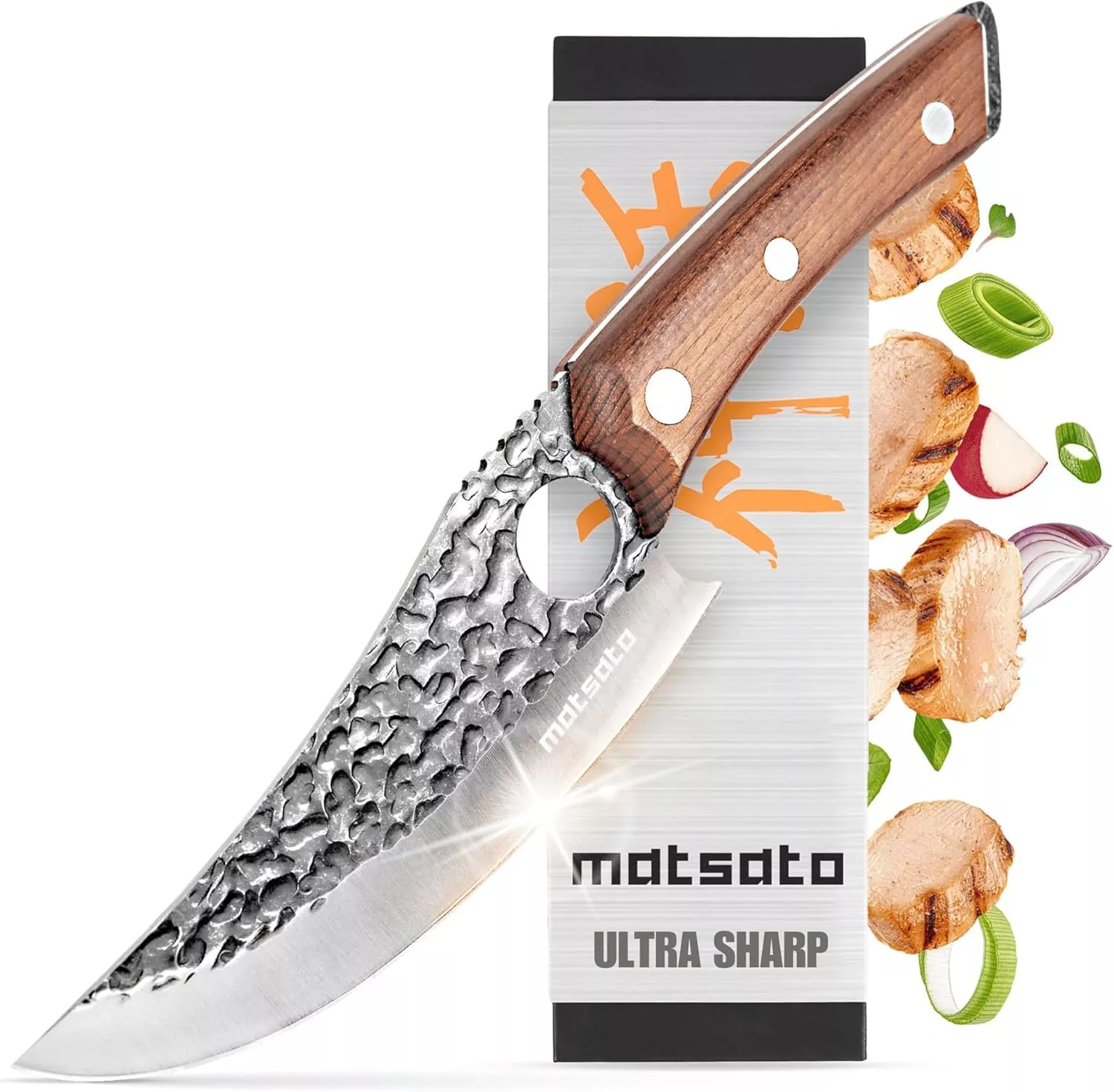
- Stays Razor-Sharp: Ice-hardened blade keeps its edge longer than ordinary knives
- Superior Grip Control: Unique finger hole design gives you perfect balance and safety
- Built to Last a Lifetime: Premium stainless steel blade with elegant beech wood handle
Customer Reviews ★★★★★
Essential Tools and Equipment
Importance of Each Tool
- Large pot: Essential for cooking the sweet potato noodles evenly without overcrowding.
- Skillet: Perfect for stir-frying ingredients quickly over high heat to maintain their texture and flavor.
- Sharp knife: Ensures clean cuts on vegetables for even cooking and presentation.
Ingredients
This classic Korean stir-fried noodle dish features chewy sweet potato glass noodles tossed with tender beef, colorful vegetables, and a savory-sweet blend of soy sauce and sesame oil. It’s easy to customize with chicken, tofu, or shrimp, and its vibrant flavors make it perfect for gatherings or a cozy dinner at home.
For the Protein
- 2 lb thin-sliced beef (or chicken, tofu, or shrimp)
For the Noodles
- 1 lb Korean sweet potato noodles (glass noodles / dangmyeon)
For the Vegetables
- 3 medium carrots, julienned
- 1 large white onion, thinly sliced
- 1/2 bunch green onions, chopped
- 6 garlic cloves, minced
- 1/2 lb spinach leaves
For the Sauce
- 4 tablespoons sesame oil (divided)
- 1 tablespoon olive oil
- 6 tablespoons soy sauce (or tamari)
- 3 tablespoons brown sugar
How to Make Japchae
Step 1: Cook the Noodles
Bring a large pot of water to a boil. Add a drizzle of olive oil to prevent sticking.
1. Cook the sweet potato noodles for about 5–6 minutes until they are tender.
2. Drain the noodles thoroughly and set them aside.
Step 2: Prepare the Beef
In a skillet over high heat,
1. Cook the thin-sliced beef until browned evenly.
2. Season with half of the soy sauce, half of the sesame oil, and half of the brown sugar.
3. Once cooked through, set aside.
Step 3: Stir-Fry Vegetables
In another skillet,
1. Heat olive oil over medium-high heat.
2. Add julienned carrots and sliced onion; cook until softened (about 4–5 minutes).
3. Stir in remaining soy sauce, sesame oil, and brown sugar.
4. Add minced garlic and chopped green onions; cook for an additional minute.
Step 4: Combine Everything
Add fresh spinach to the vegetable mixture,
1. Cook until wilted.
2. In a large mixing bowl, combine cooked noodles with beef and sautéed vegetables.
3. Toss everything together until evenly coated in sauce.
Step 5: Serve
Serve warm garnished with additional green onions if desired.
Enjoy your homemade Japchae!
How to Serve Japchae
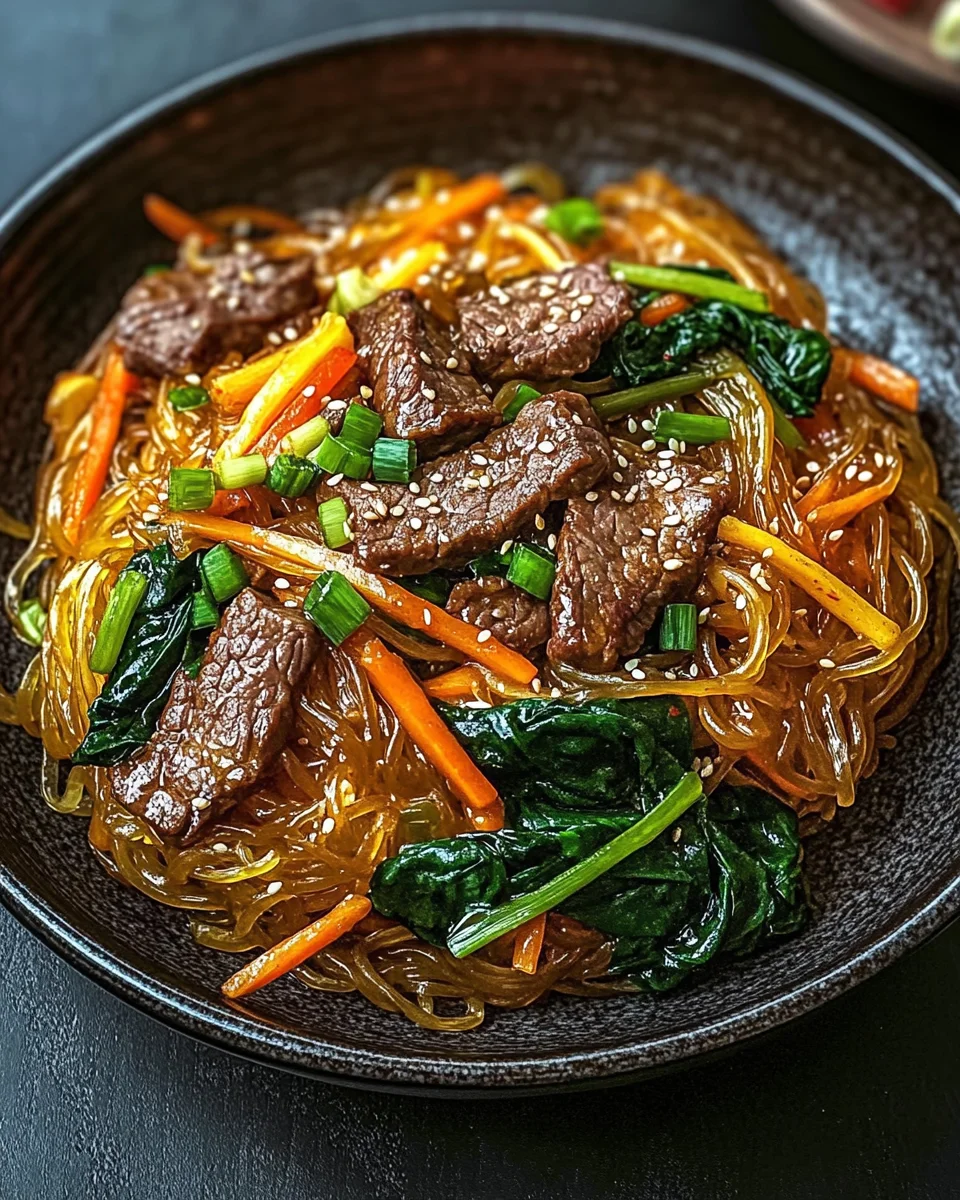
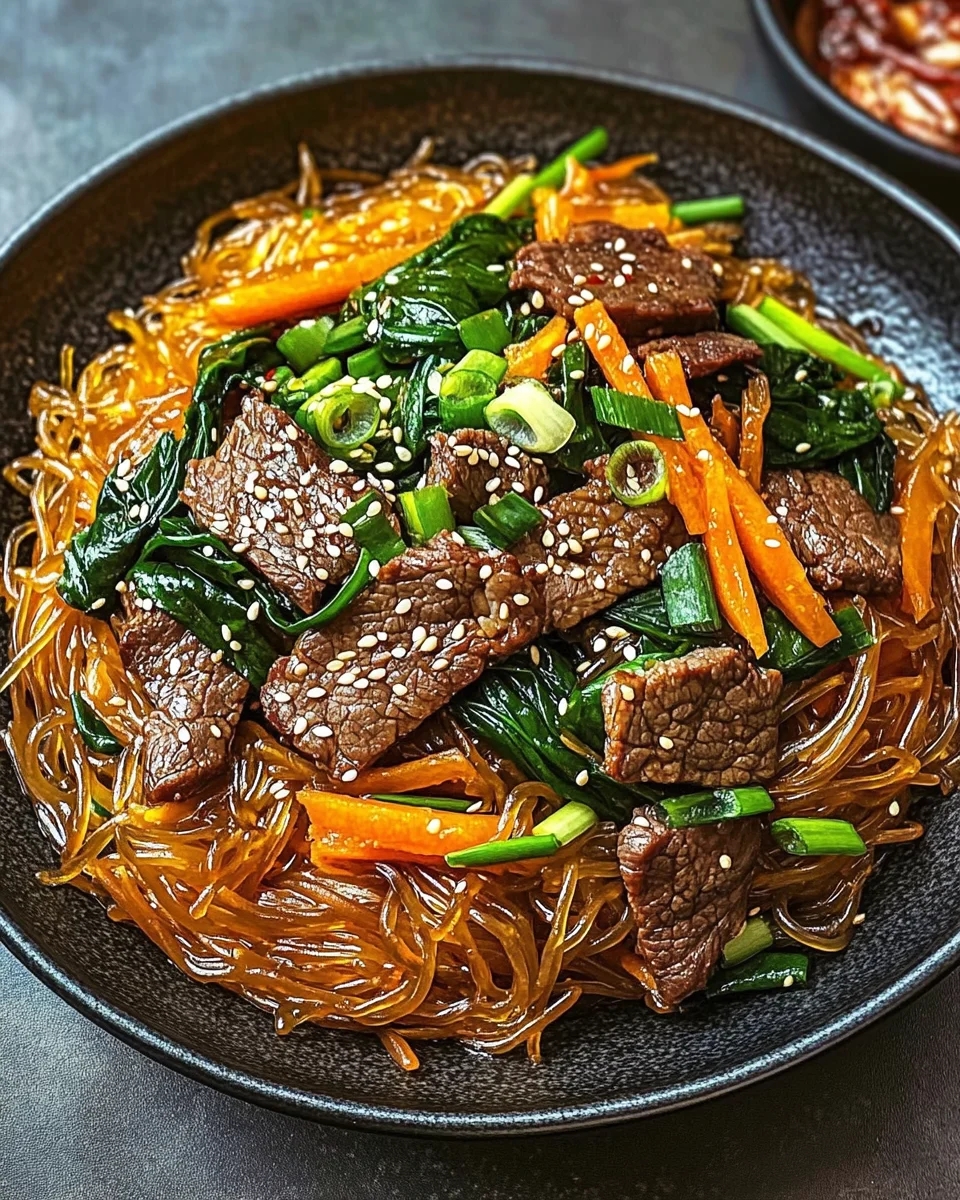
Japchae is a versatile dish that can be enjoyed in various ways. Whether you’re hosting a gathering or enjoying a cozy meal at home, these serving suggestions will elevate your Japchae experience.
As a Main Dish
- Serve Japchae warm as the star of your meal, paired with steamed rice for a hearty option.
Cold Salad Style
- Chill the leftover Japchae and serve it cold as a refreshing salad. It’s perfect for summer picnics and barbecues.
With Kimchi
- Side with traditional kimchi for an authentic Korean touch. The spicy flavors of kimchi complement the sweetness of Japchae beautifully.
Garnished with Sesame Seeds
- Sprinkle toasted sesame seeds on top for added texture and nutty flavor. They enhance the overall taste and presentation of the dish.
In Lettuce Wraps
- Use crisp lettuce leaves to wrap servings of Japchae for a fun, interactive way to enjoy your meal. This adds crunch and freshness.
How to Perfect Japchae
To make your Japchae truly exceptional, consider these helpful tips:
- Use fresh ingredients – Fresh vegetables and high-quality meat or tofu make a significant difference in flavor.
- Don’t overcook the noodles – Follow package instructions carefully to ensure the noodles remain chewy and have the perfect texture.
- Marinate your protein – Marinating beef, chicken, or tofu in soy sauce beforehand enhances the overall flavor of the dish.
- Cook vegetables separately – Stir-fry each vegetable separately before combining them. This ensures they maintain their distinct flavors and textures.
- Adjust seasoning to taste – Feel free to tweak the soy sauce and sugar levels based on your preference for sweetness and saltiness.
- Garnish creatively – Consider adding chopped nuts or herbs like cilantro for extra flavor and visual appeal when serving.
Best Side Dishes for Japchae
Pairing side dishes with your Japchae can enhance your meal. Here are some great options:
- Korean Fried Chicken – Crispy chicken coated in a spicy sauce complements the sweet flavors of Japchae perfectly.
- Bibimbap – A mixed rice dish loaded with assorted vegetables, egg, and meat, providing variety in textures and tastes.
- Pickled Radish (Danmuji) – This tangy accompaniment balances the sweetness of Japchae and adds a crunchy element.
- Spicy Cucumber Salad (Oi Muchim) – Refreshing cucumbers tossed in chili flakes add heat and zest to your meal.
- Egg Roll (Gyeran Mari) – A fluffy egg roll packed with vegetables makes a light yet satisfying side dish.
- Seaweed Salad (Miyeok Muchim) – Salty seaweed provides an umami-rich contrast that pairs well with sweet potato noodles.
- Miso Soup – A warm bowl of miso soup serves as a comforting addition that complements the main dish without overpowering it.
- Steamed Broccoli – Simple steamed broccoli adds color, nutrition, and balance to your plate without distracting from the main flavors of Japchae.
Common Mistakes to Avoid
Making Japchae can be a delightful experience, but there are a few common pitfalls to watch out for.
- Boldly overcooking the noodles: Overcooked sweet potato noodles can become mushy. Always follow the cooking time on the package and taste them before draining.
- Ignoring ingredient prep: Not preparing your vegetables in advance can lead to uneven cooking. Chop everything before you start cooking to ensure even texture and flavor.
- Skipping seasoning adjustments: Soy sauce and sesame oil vary in saltiness. Taste as you go and adjust the seasoning for your personal preference.
- Neglecting to toss well: Failing to mix the noodles and ingredients thoroughly can result in uneven flavor distribution. Toss everything together until well combined before serving.
Storage & Reheating Instructions
Refrigerator Storage
- Store leftover Japchae in an airtight container.
- It will stay fresh for up to 3 days in the refrigerator.
Freezing Japchae
- You can freeze Japchae for up to 2 months.
- Use freezer-safe containers or bags for best results.
Reheating Japchae
- Oven: Preheat to 350°F, cover with foil, and heat for about 15-20 minutes.
- Microwave: Place in a microwave-safe dish, cover, and heat on medium power until warm, stirring halfway through.
- Stovetop: Reheat in a skillet over low heat with a splash of water or oil, stirring occasionally until heated through.
Frequently Asked Questions
Here’s what people often ask about Japchae.
What is Japchae?
Japchae is a traditional Korean dish made with sweet potato glass noodles stir-fried with various vegetables, meat, and a savory sauce.
Can I make Japchae vegetarian?
Yes! Substitute beef with tofu or mushrooms and add more vegetables for a delicious vegetarian version of Japchae.
How do I customize my Japchae?
You can customize Japchae by using different proteins like chicken or shrimp, or by adding your favorite vegetables like bell peppers or zucchini.
What do I serve with Japchae?
Japchae is great on its own but pairs well with rice, kimchi, or other Korean side dishes for a complete meal.
Final Thoughts
Japchae is not only delicious but also versatile. With its chewy noodles and colorful veggies, it’s perfect for any occasion. Feel free to customize it according to your taste preferences by swapping in different proteins or vegetables. Give this recipe a try; you won’t be disappointed!

Japchae
- Total Time: 40 minutes
- Yield: Serves approximately 6 people 1x
Description
Discover the delightful flavors of Japchae, a beloved Korean dish that brings comfort and culinary joy to your table. This savory stir-fry features chewy sweet potato noodles, tender beef, and an array of colorful vegetables, all tossed in a luscious sauce made from soy sauce and sesame oil. Perfect for gatherings or cozy dinners, Japchae is customizable, allowing you to swap proteins or add your favorite veggies. With its rich taste and appealing presentation, this dish not only satisfies hunger but also delights the senses.
Ingredients
- 2 lb thin-sliced beef (or chicken, tofu, or shrimp)
- 1 lb Korean sweet potato noodles (glass noodles)
- 3 medium carrots, julienned
- 1 large white onion, thinly sliced
- 1/2 bunch green onions, chopped
- 6 garlic cloves, minced
- 1/2 lb spinach leaves
- 4 tablespoons sesame oil (divided)
- 1 tablespoon olive oil
- 6 tablespoons soy sauce
- 3 tablespoons brown sugar
Instructions
- Cook the sweet potato noodles in boiling water for 5–6 minutes until tender. Drain and set aside.
- In a skillet over high heat, cook the beef until browned. Season with half of the soy sauce, sesame oil, and brown sugar; set aside.
- In another skillet, heat olive oil over medium-high heat. Stir-fry carrots and onion until softened. Add remaining soy sauce and sesame oil along with garlic and green onions; cook for an additional minute.
- Add fresh spinach to wilt it down. Combine cooked noodles, beef, and sautéed vegetables in a large bowl; toss to coat evenly.
- Serve warm garnished with extra green onions if desired.
- Prep Time: 20 minutes
- Cook Time: 20 minutes
- Category: Main
- Method: Stir-frying
- Cuisine: Korean
Nutrition
- Serving Size: 1 bowl (250g)
- Calories: 450
- Sugar: 8g
- Sodium: 800mg
- Fat: 15g
- Saturated Fat: 4g
- Unsaturated Fat: 10g
- Trans Fat: 0g
- Carbohydrates: 60g
- Fiber: 4g
- Protein: 20g
- Cholesterol: 50mg